
Abroad internship in Japan – Batinay’s interview
This summer, discover each week the portrait of our M1 students who are currently on international mobility.
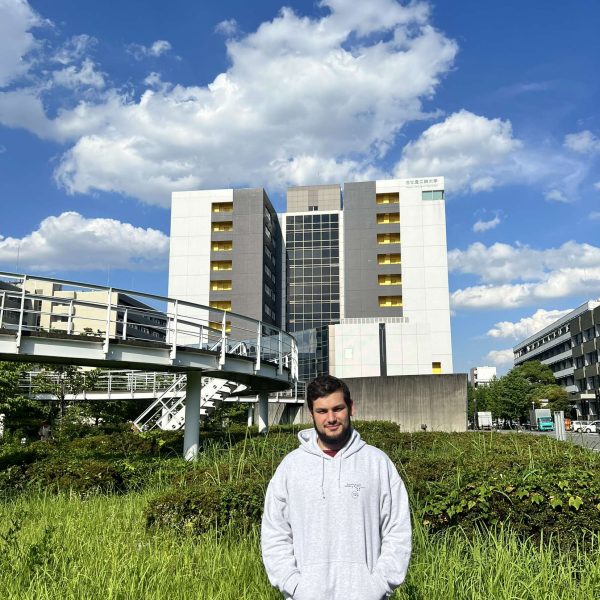
Today it is Batinay, student in the Advanced Ceramics course who is doing his mobility at the Nagoya Institute of Technology, Nagoya (Japan).
1. What is your background?
My name is Batinay Kiziltas, I started my higher education in Limoges in 2019, I did an L1 RP (Progressive Pace) MIPCGC (Math Info Physics Chemistry Civil Engineering). Being in PR, my first two years of faculty were extended into three years. From L2 RP, I started to move towards inorganic chemistry and in L3 I chose to specialize in ceramics, it was that year that we were presented with the EUR course, after my L3 so I applied for this master’s degree.
2. Mobility abroad is compulsory in M1 EUR, were you apprehensive about this mobility?
At the beginning it was joy and enthusiasm, it seemed like a dream to say to ourselves that we were going to go abroad for an internship for several months. As the deadline approached, reality began to replace the dream and it was more and more anxiety that replaced joy. I was mainly worried about missing my plane or being turned away at the airport. But everything went well in the end!
3. How did the internship search go and how did you choose your internship location?
As for finding an internship, it went relatively easily for me. I already had a destination and a vague idea of what I wanted to work on. I wanted to do an internship, if possible in Japan, mixing inorganic and organic, I spoke about all of this to my professor responsible for internships abroad and she put me in touch with a professor with contacts in Japan.
4. What is your internship topic?
My internship topic is: “Synthesis of bioactive sol-gel glasses for tissue regeneration”.
5. How is the internship going overall?
Overall, the internship is going well, the integration has gone very well, the team is quite friendly and really welcoming.
6. What do your internship missions look like?
In my case, I assisted a first-year thesis student on his research on bio-glasses. My days consist of carrying out manipulations with him, whether for the synthesis of glass or the characterizations, he often made me participate, which was really nice.
7. Do you have a travel story to tell? A culture shock when you arrive?
The Japanese administration is something, be patient because they may ask you for the same information several times. The only cultural shock I had was that the Japanese wear crocs like they go to work.
8. What advice would you give to future students who are going to do their mobility?
As for advice, buy adapters in advance, it will save you trouble. When it comes to food, in Japan at least, restaurants are really inexpensive and often it’s cheaper to eat out than to prepare food at home. Pay attention to the different climates that you are likely to experience during your stay, the inhabitants of the country are used to this so it is likely that you will be able to find refreshing wipes or something else that will help you cope with the high heat and high humidity.