
International mobility – Internship in Spain
This summer, discover each week the portrait of our M1 students who are currently on international mobility.
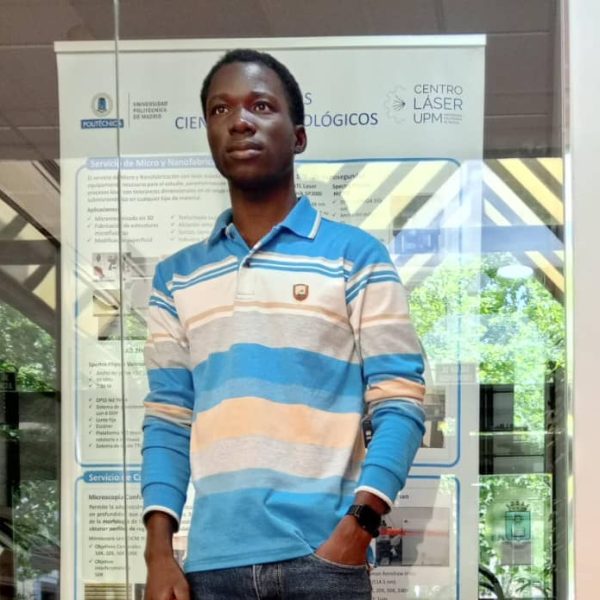
Today it is Tchanadéma, student in the High Frequency Electronic and Photonic program, who is doing his internship at the Technical University of Madrid (Spain).
1. What is your background?
My name is Tchanadéma DAMOUA, I am currently a Master 1 student in High Frequency Electronics and Photonics (iXeo) at the University of Limoges. Before that, I obtained a fundamental degree in physics at the University of Lomé, which allowed me to develop a solid foundation in electronics and optics. My interest in photonics naturally led me to this master’s degree, where I continue to deepen my scientific knowledge in the field of photonics and high frequency electronics.
2. International exchange is mandatory during the first-year Master’s program in TACTIC Grad School. Were you apprehensive about this exchange?
Even though I had already left my country, Togo, I had mixed feelings. On the one hand, I was excited about the prospect of discovering a new culture and gaining professional experience. On the other hand, I was apprehensive, especially because of the language barrier.
3. How did the internship search go, and how did you choose your internship location?
Finding an international internship required a lot of investment. I started by targeting laboratories and institutions related to my interests, mainly in Spain, Germany, and Italy. I sent several unsolicited applications and responded to a few offers from the laboratories I had previously targeted. I was finally accepted into the Centro Laser UPM laboratory in Madrid, whose work perfectly matched my career goals.
4. What is the topic of your internship?
My internship focuses on “The exploration and optimization of the LIFT technique for laser printing of biomaterials used in tissue engineering”. The main objective is to understand the LIFT technique used to print cells and to optimize the system. I mainly work on image processing taken during bioprinting under different conditions in order to optimize the bioprinting system by the LIFT technique, which allows me to acquire new skills and better understand the importance of the use of lasers in biomedicine.
5. How is the internship going overall? Integration with the on-site teams, etc.
The internship is taking place in good conditions. I had the opportunity to meet other international students who had also come for internships, which greatly facilitated my integration and allowed me to quickly bond with the team. My tutor gives me a lot of autonomy in my work, which pushes me to be rigorous, manage my time well, and take initiatives. It’s not always easy, but it’s an extremely educational and enriching experience on both a personal and professional level.
6. What are your responsibilities and what does a typical day of your internship looks like?
I am working on developing and testing an image processing model, primarily using MATLAB. At the same time, I am conducting a literature review to support and enrich my technical work.
7. A travel story to share? Any culture shock there?
A notable anecdote is the very friendly atmosphere in the lab. The team regularly organizes coffee breaks and meals with the interns, which I didn’t expect at all. These informal moments really helped my integration. I was pleasantly surprised by this relaxed but efficient work culture, different from what I had experienced before.
8. What advice would you give to future students who are going on their exchange program?
Don’t limit yourself to the most well-known labs. Sometimes, small organizations offer excellent training. And above all, get involved in local life. Mobility isn’t just an internship; it’s also a human adventure.