
International mobility – Internship in Greece
This summer, discover each week the portrait of our M1 students who are currently on international mobility.
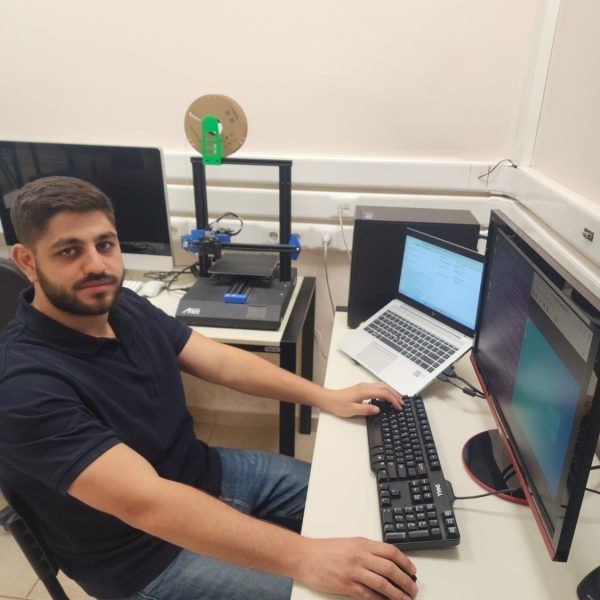
Today it is Atieh, student in the Information Security program, who is doing his internship at the University of Macedonia, Thessaloniki (Greece).
1. What is your background?
I am Atieh Atieh, a computer engineer currently specializing in information systems security in CRYPTIS – Information Security program. The TACTIC Graduate School Excellence Program offered me the opportunity to complete an internship at the University of Macedonia in Thessaloniki, Greece, where I am having a professional, enriching, and international experience. This internship allows me to put my technical cybersecurity skills into practice and consolidate my knowledge in the field.
2. International exchange is mandatory during the first-year Master’s program in TACTIC Grad School. Were you apprehensive about this exchange?
This year represents my first experience living abroad, far from my home country, Lebanon. My integration began in France, where the structured and supportive academic environment of the University of Limoges greatly helped me fully commit to this new path. This first mobility, although sometimes demanding, proved to be deeply enriching, both personally and intellectually. Today, my second mobility in Greece extends this dynamic. While settling in a new country can seem daunting, this time I felt much more prepared, confident, and enthusiastic. Each experience gives me a new perspective on the world, while strengthening my skills in a multicultural environment.
3. How did the internship search go, and how did you choose your internship location?
Finding an internship abroad was a demanding process, which required me to use several approaches. I began several months in advance by activating my personal network, notably by asking certain professors if they had previous contacts of students who had gone abroad. At the same time, I conducted personal research, targeting companies and laboratories specializing in cybersecurity, to ensure an experience that aligned with my professional goals.
4. What is the topic of your internship?
My internship is part of an applied research approach focused on malware analysis workflows within Security Operations Centers (SOCs). The goal is to study and optimize the various stages of attack detection, analysis, and response.
This experience allows me to use cutting-edge tools, understand the methodologies used by SOC analysts, and contribute to improving threat response capabilities in a real-world operational setting.
5. How is the internship going overall? Integration with the on-site teams, etc.
The internship is going very well, both professionally and personally. Greece is an ideal setting: what could be better than productive weekdays and a Greek-style weekend, surrounded by sun, sea, and local culture? The integration happened naturally. The team welcomed me warmly, which allowed me to adapt quickly. Communication is fluid, and I feel listened to and valued in my daily work.
6. What are your responsibilities and what does a typical day of your internship looks like?
My responsibilities primarily involve analyzing malware samples, reviewing research articles related to analysis workflows, and proposing automation options suitable for SOC environments. A significant part of my work involves discussing these ideas with my supervisor to bring theory and practice into play. A typical day begins with a quick briefing on upcoming tasks, followed by analysis, technical reading, and supervised experimentation.
7. A travel story to share? Any culture shock there?
The real culture shock for me was the particularly slow pace of life here in Greece; people here really take their time to live. What struck me most was the lively atmosphere from early in the morning: from 7 a.m. onward, you can hear animated discussions in the street, voices echoing between the buildings, sometimes even passionate debates. There is almost never complete silence, even very early or very late. This is a strong cultural aspect, reflecting the conviviality and daily energy of the locals.
8. What advice would you give to future students who are going on their exchange program?
Everything is difficult at first: adapting to a new country, understanding another culture, living far from your roots… But if you keep your goal in mind, every obstacle becomes a step towards success. I advise future students to approach this mobility with an open mind and true determination. Don’t be afraid of the unknown: ask questions, connect, and accept the unexpected. With courage and curiosity, this experience becomes much more than just an internship—it’s a moment of personal and professional transformation.